
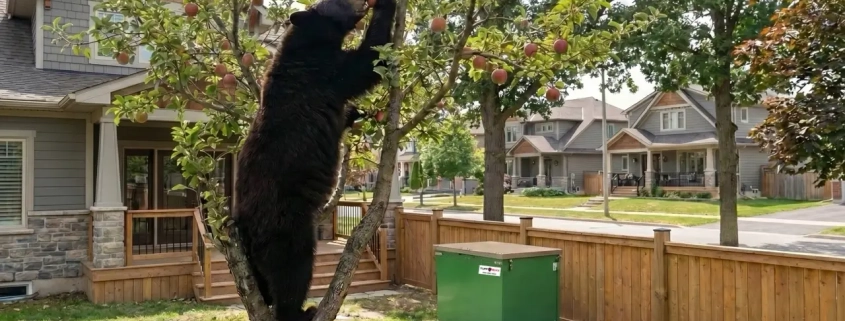
Bears Are Waking Up. Here is What Every Canadian Homeowner Needs to Know This Spring.
Every spring, the same thing happens. The snow starts to melt, temperatures climb, and somewhere not far from your property, a bear is emerging from its den for the first time in months. It is hungry, it is alert, and it is looking for the easiest food source it can find.
That food source is often a residential property that was not prepared for it.
Spring is the most critical time of year to get your home ready for bear season. Bears that spent the winter fasting come out in a state of caloric urgency. They need to eat, and they will be persistent in finding out what is available near them. Once a bear finds food on your property, it will return. Preventing that first visit is everything.
The team at BearWise, a program created by bear biologists and supported by state and provincial wildlife agencies, has put together seven tips for a bear-aware spring. We are sharing them here because every homeowner in bear country should have this information heading into the season.
1. Pay attention when you are out walking
Spring mornings and evenings are prime time for bear movement. If you are walking in your neighbourhood, a park, or anywhere near green space, keep your dog on a leash, stay alert to your surroundings, and carry a safety whistle or noisemaker. If you do surprise a bear, do not let your dog chase it. Back away calmly and leave the area. It is also a good time to check the expiration date on your bear spray and replace it if needed.
2. Check garages, porches, decks, and outbuildings
An unlocked garage or shed storing pet food, birdseed, livestock feed, or even an unwashed BBQ grill is an open invitation. Bears are powerful and persistent, and they will investigate anything that smells like food. Your screened-in porch is not “inside” to a bear, and under your deck is not out of its reach either. Do not leave anything with a scent on or under outdoor structures overnight.
3. Clean out your vehicle
This one surprises people. Bears have been known to enter unlocked vehicles attracted by the smell of an empty bag of dog food, a pack of gum, or even drink bottles and wrappers left in the cupholder. Get in the habit of cleaning out your vehicle at the end of the day, rolling up windows, and locking the doors. This is especially important if you park outside.
4. Secure your garbage properly
This is the most common conflict point between bears and residential properties. If you have been putting bins out the night before pickup, stacking boxes near the back door, or leaving recycling loosely stored, now is the time to change that habit.
Bears can smell an empty pizza box from a significant distance. Garbage and recycling should be stored in a sturdy building or a bear-resistant container and only put out on the morning of pickup, not the night before.
This is exactly what TuffBoxx containers are built for. Our galvanized steel bins are engineered to hold their shape and their lock under sustained wildlife pressure. When a bear cannot get in, it eventually stops trying and moves on. That is the outcome you want, and it is one a flimsy plastic bin simply cannot deliver.
5. Take down bird feeders
If you are still running bird feeders, you could soon find a very large, very motivated visitor ripping one down. Bears learn fast and remember well. When you take feeders down, bring any stored birdseed inside too. Do not just relocate it to a shed or porch.
6. Manage pet food carefully
Pet food is a concentrated, high-calorie attractant. It is exactly what a hungry post-hibernation bear is looking for. Feed pets indoors whenever possible. If you need to feed them outside, do it in single portions, remove the bowl and any leftover food immediately after feeding, and store all pet food inside in a secure location.
7. Help your neighbours get ready too
Bear awareness only works when a whole neighbourhood participates. If someone nearby leaves their bins unsecured, it draws bears closer to everyone’s property. If you have new neighbours who may not know what to expect this season, share what you know. BearWise offers free downloadable fact sheets and checklists at bearwise.org that make it easy to pass along good information.
The right container makes the difference
Following these habits matters, but so does having the right equipment. Wildlife-resistant storage is not about hoping an animal will leave your garbage alone. It is about removing the possibility entirely.
TuffBoxx galvanized steel containers are tested against real wildlife, including bears, and built to maintain their integrity season after season. Whether you are managing curbside garbage, securing a polycart bin, or storing feed, pet food, or recycling, there is a TuffBoxx built for it.
Spring is the time to act. Do not wait for the first incident.
Contact TuffBoxx to find the right storage solution for your property before bear season is fully underway.
Bear-ready starts now. Contact TuffBoxx today.
Bear safety tips in this blog are courtesy of BearWise® | www.BearWise.org, created by bear biologists and supported by state and provincial wildlife agencies, dedicated to helping people live responsibly with black bears.