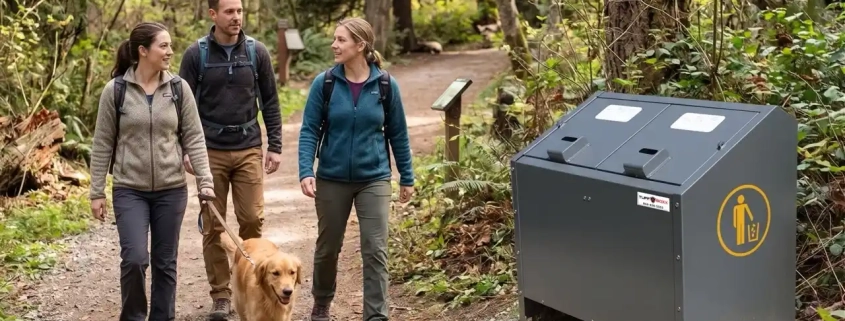
Hikers and a dog on a forest trail passing a TuffBoxx two-lid wildlife-resistant waste receptacle

Planning Next Season’s Wildlife-Resistant Waste Program: A Guide for Municipalities and Parks

For municipalities and parks departments, the quietest time of year for wildlife is the busiest time for planning. Budgets are set, procurement is underway and spring projects are scheduled over the winter months.

If wildlife conflicts with waste were a problem in your community this year, now is the time to plan the fix. Here is a practical approach to building a wildlife-resistant waste program that is ready before bears and other wildlife become active again.

1. Start With Your Data

Review this season’s wildlife reports, resident complaints and maintenance records. Look for patterns:

  • Which parks, trailheads or neighbourhoods saw the most incidents?
  • Which types of containers were targeted?
  • What times of year did problems peak?

Targeting the hot spots first gives your budget the biggest impact.

2. Match Containers to Each Environment

Public spaces and residential areas have different needs.

Parks, campgrounds and public spaces need containers that are easy for everyone to use and secure against wildlife. The TuffBoxx Camper and Picnic models use a one-finger release, mailbox-style chute that meets accessibility standards. The Trail series offers ADA-compliant single and double stream receptacles for trail systems and recreational facilities, and the Broot handles high-volume waste of up to 20 bags.

Residential areas often already have curbside polycarts. The TuffBoxx ToteBoxx encloses existing 64 and 96 gallon carts in a lockable steel enclosure, so residents can secure the carts they already have.

3. Plan for Servicing

A container only works if crews can service it efficiently. TuffBoxx commercial containers are designed to work with standard inner containers and liners, and lockable front doors make collection straightforward while keeping waste secure between pickups.

4. Pair Infrastructure With Education

The best containers work best when people use them correctly. Plan for clear signage, resident communication and simple messaging about why wildlife-resistant storage matters. Free resources from organizations like BearWise can support local education efforts.

5. Phase the Rollout

You do not have to replace everything at once. Many communities start with the highest-conflict locations, measure the results, then expand the program in later budget cycles.

6. Order Early

TuffBoxx containers are built in Princeton, Ontario. Placing orders over the winter helps make sure containers are delivered and installed before wildlife activity picks up in spring.

A Program That Pays Off

A well-planned wildlife-resistant waste program reduces cleanup costs, protects public safety and keeps wildlife from becoming dependent on human food. It also shows residents that their community takes the issue seriously.

Plan this winter. Be ready by spring. Contact TuffBoxx today to discuss solutions for your municipality or parks department.

Toll free: 1-800-387-6318
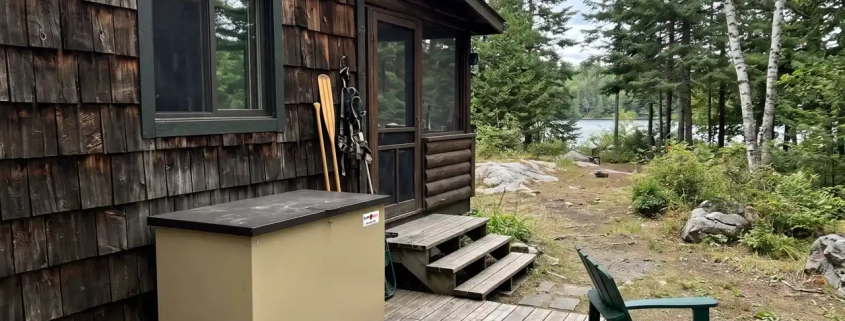
Closing the cottage for winter with a tan TuffBoxx storage box on a wooden deck beside a lakeside cabin

Closing the Cottage for Winter? Do Not Leave Wildlife an Open Invitation

Closing the cottage for winter is a fall tradition. The dock comes out, you shut off the water and the shutters go up. But once you lock the door and drive away, your property sits empty for months, and wildlife notices.

Raccoons, mice, skunks and bears are always looking for food and shelter. An unattended property with something worth investigating is an easy target. And because no one is around, damage can go unnoticed until spring.

Fortunately, a few extra steps when closing the cottage for winter can save you a costly surprise when you return.

Remove Every Food Source

Anything with a scent is an attractant, even if it is sealed.

  • Empty the fridge, freezer and pantry completely
  • Take all garbage and recycling with you, or dispose of it properly before you leave
  • Bring pet food, birdseed and any livestock feed home
  • Clean the barbecue, empty the grease trap and store the propane tank safely
  • Wipe down counters and sweep up crumbs

Never leave garbage behind for next time. A bag left in a shed or under a deck can draw wildlife for the entire off-season.

Secure What Stays Behind

Some things stay at the property all winter. Make sure they are protected from both weather and wildlife.

  • Store cushions, life jackets and dock accessories in a sealed, rigid container
  • Keep sports equipment, tools and pool supplies off the ground and out of reach
  • Check sheds and outbuildings for gaps where animals could get in

A plastic tote or a soft cover is no match for a determined raccoon, and plastic can crack after a winter of freeze and thaw cycles. A steel container keeps what is inside protected and dry.

Walk the Property Before You Leave

Take ten minutes to look around with fresh eyes:

  • Are there gaps under the deck, porch or cottage where animals could den?
  • Do doors, latches and windows close securely?
  • Is anything with a scent still stored outside?

Plan for Spring Now

Wildlife activity picks up quickly when the snow melts. If you set up secure storage now, your property is ready the moment you return.

The TuffBoxx recreational line is built for exactly this. Containers come in eight sizes across two heights, from compact storage to large dock bins, and they are made from galvanized steel to resist corrosion through every season. Most customers assemble them in under 30 minutes with basic tools. They can even double as outdoor seating when the season starts again.

Close the season right. Contact TuffBoxx today.

Toll free: 1-800-387-6318

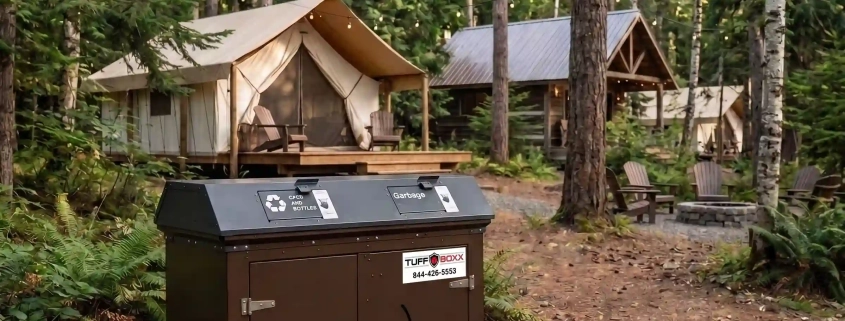
TuffBoxx commercial bin with recycling and garbage lids beside a glamping tent at an outdoor hospitality site

RV Parks, Glamping Sites, and Eco-Resorts: Why Wildlife-Resistant Storage Is Part of the Guest Experience

The outdoor hospitality industry has grown significantly over the past several years. Glamping sites, eco-resorts, and upscale RV parks now compete on the quality of the guest experience. Traditional campgrounds, by contrast, never had to. Reviews are public, and expectations are high. As a result, one wildlife incident at the wrong moment can define a guest’s entire stay and online review.

For operators in this space, wildlife-resistant waste management is not a back-of-house detail. It is a direct input into the guest experience.

The Wildlife Problem Is Not Optional

Most outdoor hospitality properties in Canada and the United States operate in or adjacent to wildlife habitat. Food waste and unsecured storage draw raccoons, bears, skunks, and other wildlife. In particular, glamping and RV park environments create exactly the conditions they are looking for. Those conditions include food odors, accessible waste, and guests who are not always vigilant about wildlife best practices.

A raccoon tipping bins near a guest’s tent at night is a disruption. A bear entering a waste area while guests are nearby is a serious safety and liability event. Neither outcome is acceptable for a property that competes on experience.

The most effective way to prevent both is to remove the attractant entirely before any incident occurs.

Guest-Facing and Back-of-House Requirements Are Different

Outdoor hospitality properties have two distinct wildlife storage challenges. The first is back-of-house: waste collection points, dumpster areas, storage rooms for food and supplies. These need high-capacity, rugged solutions that hold up to sustained wildlife pressure and daily operational demands.

The second is guest-facing: waste receptacles near dining areas, firepits, common spaces, and site pads. These need to be wildlife-resistant. They must also be easy for guests to use without instruction. They should be accessible by design and appropriate in appearance for the property’s aesthetic.

TuffBoxx addresses both. The commercial Broot handles high-volume back-of-house waste. It holds up to 20 bags of garbage and offers lockable front door access designed for easy collection. The Camper and Picnic models use an animal-resistant one-finger release mailbox-style chute. This chute is accessible, intuitive for guests, and proven against bears and smaller wildlife alike.

For guest site pads and individual use areas, TuffBoxx recreational containers provide wildlife-resistant storage for food, equipment, and personal items that guests need to keep secure and organized during their stay.

The Review Risk Is Real

A wildlife incident at an outdoor hospitality property does not stay private. It goes into the review. A property that invests in proper wildlife-resistant waste management reduces the operational risk, the liability exposure, and the reputational risk that comes with being the place where the raccoon got into the garbage or the bear showed up at site seven.

For properties competing in a market where online reviews drive bookings, that risk reduction has measurable value.

Built for Commercial Outdoor Hospitality Environments

TuffBoxx commercial containers are built from heavy-gauge galvanized steel to hold up through full seasons of outdoor use, weather exposure, and the daily demands of a working hospitality property. They are designed for waste management company servicing, simple to maintain, and proven in campground and outdoor recreation environments across Canada and the United States.

Contact TuffBoxx to discuss the right commercial wildlife-resistant storage solution for your RV park, glamping site, or eco-resort.

Contact: 1-844-426-5553

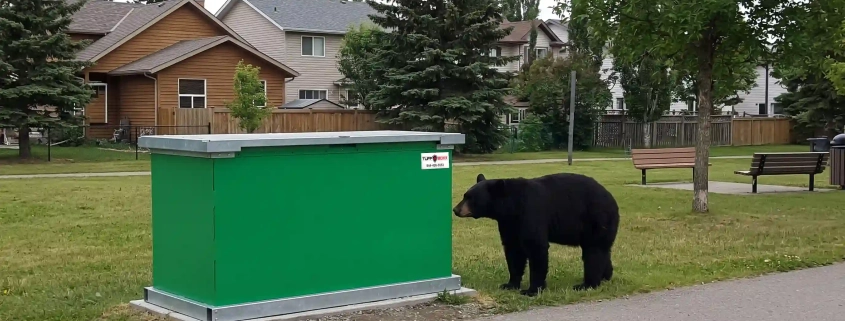
Black bear sniffing a green TuffBoxx bin in a residential park, a wildlife risk property managers can reduce

How Property Managers and HOAs Can Reduce Wildlife Incidents Across an Entire Neighbourhood

Wildlife pressure on residential properties is rarely an individual problem. When one property on a street has unsecured garbage, the raccoons, skunks, and bears it attracts become a problem for the entire block. In fact, the animal that finds a reliable food source at one address will explore adjacent properties. The pattern spreads.

Property managers and homeowners associations manage multiple units across a residential community. For them, this collective dynamic creates both a challenge and an opportunity. The challenge is that one non-compliant property can undermine the whole neighbourhood. The opportunity, however, is that coordinated, community-wide action is far more effective than individual effort.

Why Individual Solutions Are Not Enough

When wildlife management is left entirely to individual homeowners or tenants, the results are inconsistent. Some residents secure their waste properly. Meanwhile, others do not. The unsecured bins are all a motivated raccoon needs to keep returning to the area, and once an animal has established a territory around a food source, it does not stay in one yard.

Property managers and HOAs are in a unique position to set and enforce a community-wide standard that removes this inconsistency. As a result, when every unit has a wildlife-resistant storage solution, the neighbourhood stops being an attractant entirely.

Why Property Managers Need Wildlife-Resistant Storage

For property managers overseeing multi-unit residential communities, wildlife incidents create real operational and financial consequences. Property damage from wildlife accessing waste areas is a maintenance cost. Tenant complaints about scattered garbage, odors, and wildlife sightings are a management burden. In some municipalities, improperly stored waste that attracts wildlife creates bylaw liability for the property owner, not just the tenant.

Investing in proper wildlife-resistant storage across a managed property is a maintenance cost reduction, a complaint reduction, and a liability reduction. It is a business decision with a calculable return.

The HOA Case for Community Standards

For homeowners associations, the standard set around waste storage affects property values, neighbourhood aesthetics, and the general quality of life for residents. A neighbourhood where scattered garbage and wildlife visits are a recurring issue is a less desirable place to live. One where waste is consistently managed and wildlife incidents are rare is a more attractive community.

HOAs that establish clear standards around wildlife-resistant waste storage are protecting the community’s character. They also protect the value of individual properties by making it straightforward for residents to comply.

TuffBoxx for Multi-Unit and Community Applications

TuffBoxx offers a residential product range suited to the varied requirements of managed communities and multi-unit properties. The TuffBoxx Grizzly, Kodiak, and Bruin models provide heavy-duty individual unit solutions for single-family homes and townhouses. The ToteBoxx enclosure fits standard 64 and 96 gallon polycart bins, making it straightforward to bring existing bins into compliance without replacing the entire waste infrastructure.

For communal waste areas, the TuffBoxx commercial line provides high-capacity, rugged solutions designed for shared use environments with regular collection.

All TuffBoxx products are built from galvanized steel for durability through Canadian climate conditions and sustained wildlife pressure, season after season.

Contact TuffBoxx to discuss community and multi-unit wildlife-resistant storage solutions.

1-844-426-5553

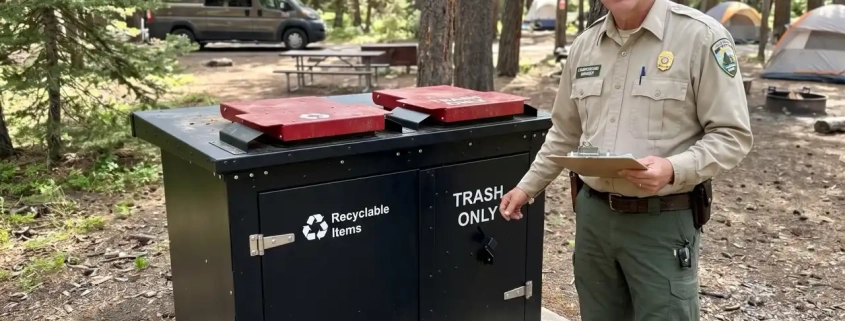
Campground managers choose dual-stream bins like this black unit with recycling and trash doors at a forest campsite

Campground Managers: Bear-Resistant Containers Are a Risk Management Decision, Not Just a Convenience

For campground operators and outdoor recreation facility managers, bear activity is not an abstract concern. It is a practical, season-long responsibility. And how a campground manages food waste and garbage has a direct impact on both the safety of guests. It also shapes the long-term behaviour of local wildlife.

A bear that successfully accesses a campground garbage source will return. Repeatedly. And once a bear becomes food-conditioned and comfortable around people, the outcomes are rarely good for the bear or the campground.

Bear-resistant containers are not just a convenience for guests. They are a foundational piece of responsible campground management.

What Regular Garbage Cans Cannot Do for Campground Managers

Standard garbage cans and dumpsters are not designed to withstand a motivated bear. A black bear can apply significant force and has enough dexterity to open or displace most conventional waste containers. Once they succeed, they learn quickly and return with confidence.

As a result, this creates a cycle that is difficult to break once it starts. The only reliable way to interrupt it is to remove the reward entirely, which means containers that bears genuinely cannot access.

The TuffBoxx Commercial Line

TuffBoxx offers a range of commercial bear-resistant containers designed for high-use campground, park, and recreation environments.

The Camper and Camper LT models use an animal-resistant one-finger release with a mailbox-style chute that is easy for guests to use while being genuinely inaccessible to wildlife. They are designed to meet accessibility standards, which matters for public campgrounds with a broad user base.

The Broot is designed for higher-capacity applications, holding up to 20 bags of garbage and providing a practical solution when front-load dumpster collection is not feasible.

All commercial TuffBoxx products feature rugged construction proven against bears, including grizzlies, while managing smaller wildlife like raccoons, skunks, rats, and birds.

A Practical Investment in Guest Safety and Wildlife Stewardship

Campgrounds that invest in proper bear-resistant waste management protect their guests, protect local bear populations, and protect their own reputation. An incident involving wildlife and improperly stored garbage creates liability, negative reviews, and potential regulatory consequences.

The cost of proper containment is straightforward. The cost of getting it wrong is not.

Contact TuffBoxx to discuss commercial container options for your campground or recreation facility | 1-844-426-5553

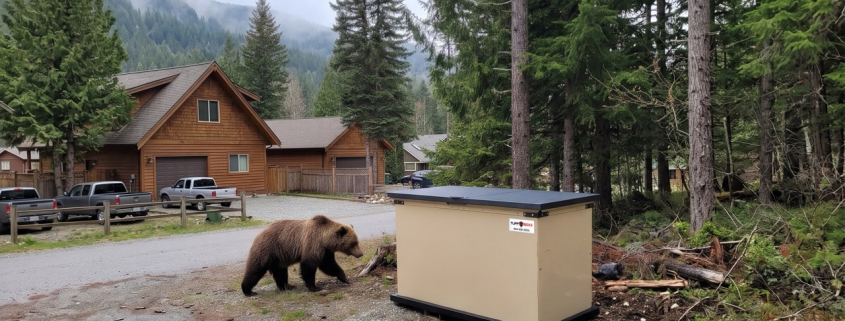
Bear-resistant TuffBoxx bin in a residential mountain community as a brown bear passes by on the gravel road

What Actually Makes a Container Bear-Resistant? Not All Bins Are Created Equal

The term bear-resistant gets used loosely. It appears on products ranging from purpose-built heavy-gauge steel containers to reinforced plastic bins with modified lids. For a buyer trying to make a responsible decision, that variation makes it difficult to know what they are actually getting.

Here is what genuine bear resistance looks like and why it matters.

Bears Are Stronger and Smarter Than Most Products Anticipate

A North American black bear is capable of applying several hundred pounds of force. It also has enough dexterity to manipulate many standard latch systems. Grizzlies are larger and stronger still, and polar bears represent the largest and most powerful of all. A container that cannot withstand that combination of strength and persistence is not bear-resistant in any meaningful sense, regardless of how it is marketed.

Genuine bear resistance starts with material and construction. The baseline requirements are steel construction and proper gauge. They also include a secure latching mechanism that requires deliberate human action to open. Finally, structural integrity that holds under sustained physical pressure is required as well.

Tested Against Real Bears, Including the Most Demanding

TuffBoxx products have been tested against real bears across most bear species, including black bears, grizzlies, and polar bears, as documented in video footage available on the TuffBoxx website. That real-world validation is a meaningful data point. A container that a motivated bear cannot open across that range of size, strength, and persistence is genuinely bear-resistant.

Accessibility Matters Too

A container that is bear-resistant but difficult for people to use will not see consistent use. That defeats the purpose entirely. The TuffBoxx Camper and Picnic commercial models use a one-finger release mailbox-style chute that is easy for people of all abilities and meets accessibility standards. What is simple for a person remains genuinely difficult for a bear.

The Right Container for the Right Application

TuffBoxx offers residential and commercial options designed for different environments and use cases, from backyard garbage bins to high-capacity campground containers. Choosing the right product for your specific situation means looking at volume requirements, installation environment, wildlife pressure, and who will be using it.

The TuffBoxx team can help match the right container to the right application.

If you are evaluating bear-resistant containers, start by asking whether the product has been tested against real bears. The answer tells you most of what you need to know.

Explore the full TuffBoxx line or contact the team directly: 1-844-426-5553

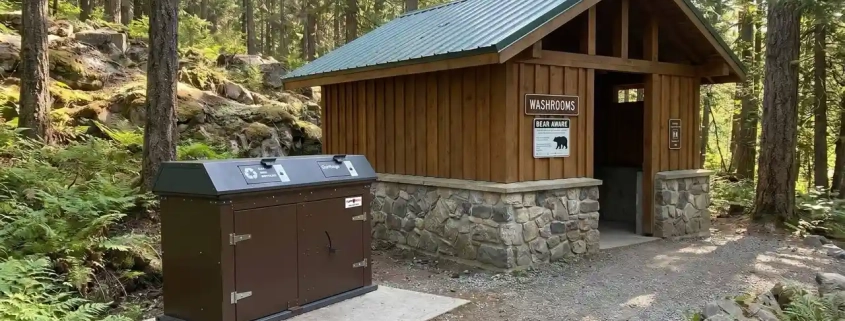
TuffBoxx commercial container installed outside Canadian park washroom facility with Bear Aware signage showing wildlife-resistant waste management for municipal park operations

TuffBoxx in the Field: Commercial Applications That Go Beyond the Backyard

When most people think of TuffBoxx, they think of a residential garbage bin that keeps wildlife out. That is a core use case and an important one. But TuffBoxx containers are built from heavy-duty galvanized steel for demanding commercial environments, and the range of applications where they are being used across Canada and the United States goes well beyond the residential backyard.

Here is a look at the commercial environments where TuffBoxx is making a practical difference.

Municipal Parks and Sports Leagues

Community parks and sports facilities are among the most active TuffBoxx commercial environments. Playing fields, park washroom areas, and common spaces generate significant waste during busy seasons, and standard municipal bins are frequently targeted by raccoons, skunks, and bears in areas where wildlife is active.

TuffBoxx commercial containers are used for both sports field equipment storage and waste management at municipal parks and sports league facilities. The commercial product line handles high-volume environments where wildlife pressure is real and consistent, and where a wildlife incident affects the experience of the families and players using the space.

Campgrounds and Picnic Areas

Campgrounds and designated picnic areas require waste management and food storage solutions. These must hold up against bears and smaller wildlife throughout the full operating season. TuffBoxx commercial containers are designed for exactly this environment. They provide food storage lockers and bear-resistant waste containment for campgrounds across Canada and the United States.

The Camper and Camper LT models use a one-finger release mailbox-style chute that is accessible for guests and resistant to wildlife. The Broot handles higher-volume waste requirements, holding up to 20 bags of garbage and providing a practical alternative where front-load dumpster collection is not feasible.

Swimming Pool and Aquatic Facility Areas

Outdoor pool facilities and aquatic centres deal with specific storage challenges. Chemicals, equipment, and waste require secure storage in environments exposed to water, humidity, and heavy seasonal use. TuffBoxx containers provide secure storage for pool maintenance equipment and chemicals. Supplies stay protected and inaccessible to wildlife and unauthorized access throughout the summer season.

Agricultural and Equestrian Properties

Feed, tack, and other agricultural supplies require secure storage that keeps wildlife out between uses. Feed storage attracts bears, raccoons, and other wildlife in agricultural and equestrian environments, and a compromised feed store creates both a loss and an ongoing wildlife pressure problem. You can use TuffBoxx wildlife-resistant bins for agricultural and equestrian storage applications where durability and wildlife resistance are both priorities.

One Product Line, Many Applications

What makes TuffBoxx practical across all of these environments is consistency. Heavy-duty galvanized steel construction, wildlife-resistant design, and quality standard remain consistent. This applies whether the container is managing waste at a community ball diamond or securing feed at an equestrian facility.

If you manage a commercial property, recreational facility, or institutional space with a wildlife management or secure storage challenge, TuffBoxx is worth a conversation.

Contact TuffBoxx to discuss the right solution for your commercial application. tuffboxx.com | 1-844-426-5553

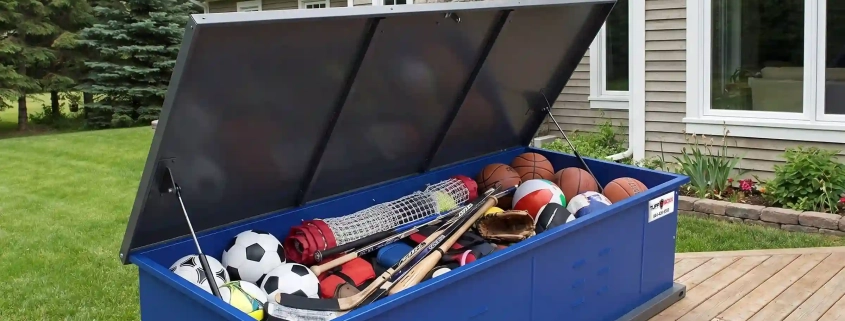
TuffBoxx blue summer storage container on residential deck holding sports equipment including basketballs, soccer balls, baseball bats and gloves demonstrating seasonal storage organization

Summer Storage: How to Protect Your Recreational Property All Season Long

The dock is in. The deck furniture is out. Summer at a cottage or recreational property is everything it should be, until a raccoon gets into the storage bin overnight, or the equipment left outside comes out warped, rusted, or worse.

Protecting a recreational property through a full season takes more than a tarp and a hope. Here is what to think about before the season gets underway.

Wildlife Does Not Take the Summer Off

Summer is active season for raccoons, skunks, bears, and other wildlife across Canada. Recreational properties, cottages, and seasonal cabins are particularly vulnerable because they are often unattended for days at a time. An unsecured bin, an accessible food source, or poorly stored equipment is an open invitation that gets acted on quickly when no one is around.

The damage wildlife can do to outdoor equipment, storage areas, and property structures in a single visit is significant. The cost of replacement or repair is almost always higher than the cost of prevention.

What Needs to Be Secured

At a recreational property, the list of attractants and vulnerable items is longer than most people realize:

  • Garbage and recycling waiting for pickup
  • Pet food and birdseed stored in sheds or on decks
  • Sports equipment, gardening tools, and pool supplies stored outdoors
  • Dock equipment and marine accessories left accessible overnight
  • Food and waste from outdoor entertaining

Each of these represents either an attractant that draws wildlife in, or a valuable item that needs protection from weather and opportunistic animals.

TuffBoxx Recreational Storage

We build the TuffBoxx recreational line for exactly this environment. Containers are available in eight sizes across two height configurations, the standard 30-inch SH models and the lower 20-inch LH models, covering everything from compact poolside storage to large-capacity dock bins.

Recreational TuffBoxx containers are built from galvanized steel to resist corrosion through a full season of sun, rain, and humidity. They are strong enough to keep wildlife from accessing stored contents, and durable enough to protect equipment from the elements. They can also double as benches, combining storage function with practical outdoor seating.

All containers come in a ready-to-assemble design that most customers complete in under 30 minutes with basic tools.

Start the Season Right

Secure your recreational property before the first incident, not after one. A wildlife visit to an unsecured property is not a one-time event. Animals return, and they come back with more confidence each time.

Contact TuffBoxx to find the right recreational storage solution for your dock, deck, pool area, or cottage property.

Built for the seasons. Contact TuffBoxx today. 1-844-426-5553 | tuffboxx.com

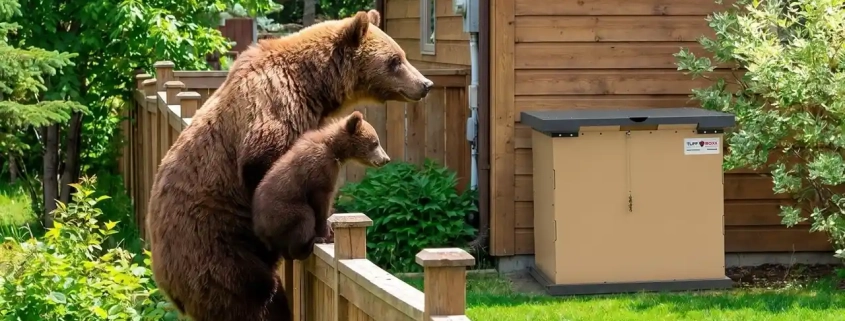
Mother bear and cub in residential backyard near TuffBoxx bear-resistant container demonstrating why secure storage is essential during bear season

Bears Remember Where You Left Your Garbage. It Is That Time of Year Again.

It is May. Bears are active, mothers are teaching their cubs, and according to BearWise, one of the most important things happening right now is simple: bears are going back to every place they found food last year.

BearWise, the national bear education program created by bear biologists, puts it plainly in their “What Bears Do in May” article: bears have a built-in GPS, great long-term memories, and an uncanny ability to find their way back to anywhere they found reliable food the year before.

That includes your garbage.

Where’s the Food?

According to BearWise, if you had any bear visits last year, you can expect them again. Bears are attracted to anything that smells, and they can detect food odors from well over a mile away. Unsecured garbage, pet food left outside, bird feeders, compost, and even empty beverage containers are all potential attractants. Once a bear learns that a property is a reliable food source, it will return. Repeatedly. And it will bring the lesson with it into the following year.

In some areas, bears have even learned which night the garbage goes out for pickup.

Out of Sight, Out of Smell, Out of Reach

BearWise recommends that garbage and recycling be stored where bears cannot smell or access it. A properly latched bear-resistant container is one of the most effective solutions. Screened porches, open garages, truck beds, and outside the back door do not qualify.

That is exactly where TuffBoxx comes in.

TuffBoxx bear-resistant containers are built to hold up against bears, including grizzlies, while remaining easy for people to use. Whether you need a residential bin to secure your household garbage, a commercial solution for a campground or park, or a storage container for food and supplies in bear country, TuffBoxx is designed to do what a regular garbage can cannot.

Heavy-duty construction. Secure latching systems. Proven in the field.

If a bear visited your property last spring, it has already made a mental note. This season, make sure there is nothing worth coming back for.

Be BearWise. Store Smart.

Courtesy of BearWise® | www.BearWise.org Source articles: “What Bears Do in May” and “What’s on the Bear Menu? Everything” Visit BearWise at www.bearwise.org for more information on living responsibly with bears.

Explore TuffBoxx bear-resistant containers at tuffboxx.com or contact us at 1-844-426-5553.

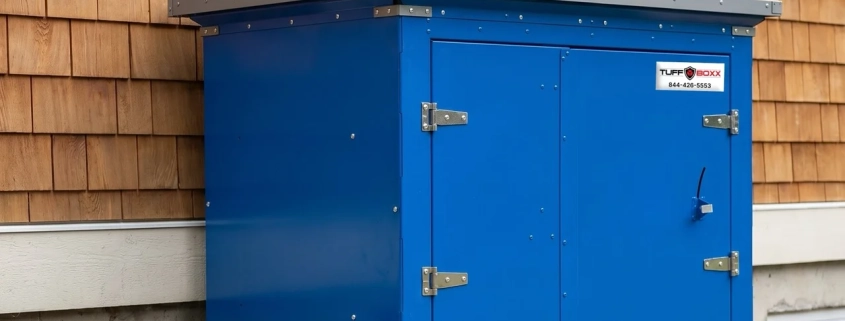
Wild skunk at Canadian residential home with cedar siding investigating TuffBoxx blue galvanized steel wildlife-resistant storage container demonstrating urban wildlife pressure and secure storage solution

Coyotes, Raccoons, and Skunks: The Wildlife You Are Probably Not Thinking About

Bears get most of the attention when it comes to wildlife-resistant storage. And for good reason. But for the majority of Canadian homeowners, the wildlife problem showing up on their property is not a bear. It is a raccoon going through the recycling at midnight. A skunk under the deck drawn in by pet food. A coyote circling the yard because the garbage has been out since last night.

Urban and suburban wildlife pressure is a year-round reality across Canada. And the animals causing the most frequent problems are the ones that rarely make the news.

The Urban Wildlife Problem

Raccoons, coyotes, and skunks are highly adaptable. They thrive in suburban and urban environments because those environments offer reliable food sources: unsecured garbage, compost, pet food, and birdseed left outside. Once an animal finds a consistent food source at a property, it returns. And it tells others.

The consequences range from scattered garbage and property damage to more serious concerns. Skunks and raccoons are known carriers of rabies and other diseases. Coyotes drawn to residential areas by food sources can pose a risk to small pets. The pattern, once established, is difficult to break without removing the food source entirely.

What These Animals Can Get Into

Raccoons are remarkably capable. They can open standard latches, tip over bins, pry apart lids that are not properly secured, and return night after night with increasing persistence. Skunks are drawn to low-to-ground attractants and will investigate anything that smells like food. Coyotes are opportunistic and will work at a waste source if it is accessible.

Plastic bins, thin-walled metal containers, and unsecured lids do not stop any of them for long.

Removing the Attractant

The most effective way to manage urban wildlife pressure is to remove what draws animals to the property in the first place. For most homeowners, that means securing garbage and recycling in a container that cannot be opened, tipped, or pried apart.

TuffBoxx galvanized steel containers are built to hold up against sustained wildlife pressure from raccoons, coyotes, skunks, and larger animals. The residential product line includes options for single and multiple garbage bags, polycart enclosures, and recreational storage for docks, decks, and outdoor spaces.

  • Keep garbage secured until collection day
  • Store pet food and birdseed inside or in a sealed steel container
  • Remove compost attractants or secure them in a wildlife-resistant bin
  • Do not leave anything with a food scent accessible overnight

You Do Not Have to Live in Bear Country to Need Secure Storage

Wildlife-resistant storage is not just for properties in the wilderness. It is for any property where unsecured waste creates an open invitation. For most Canadian homeowners, raccoons receive that invitation more often than bears.

Contact TuffBoxx to find the right solution for your property.

Keep wildlife out. Contact TuffBoxx today. 1-844-426-5553 | tuffboxx.com

Note: For additional urban wildlife resources and tips, visit BearWise at bearwise.org. Permission to reference BearWise content to be confirmed before publishing.