
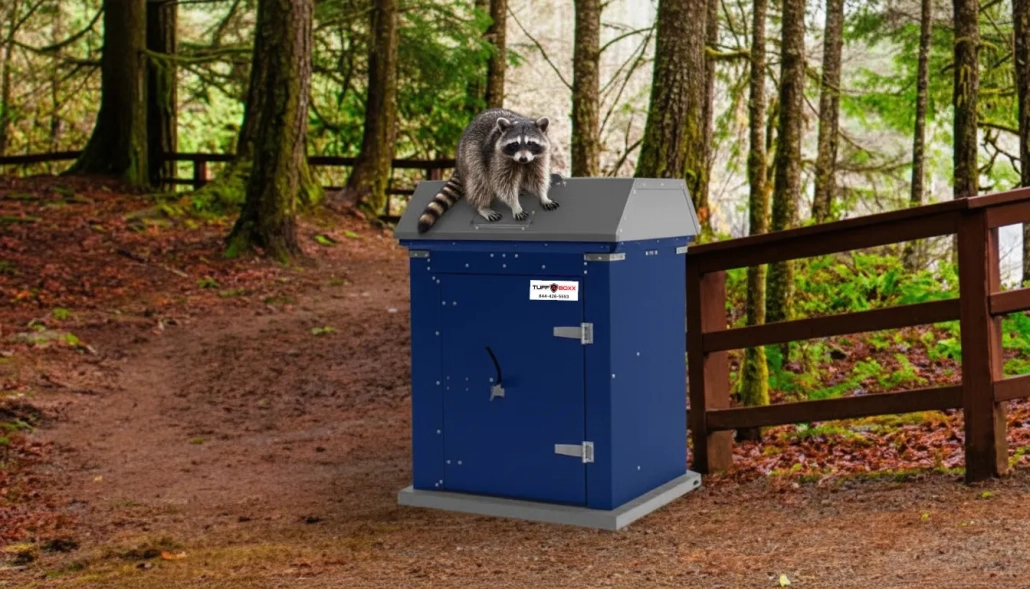
Wildlife-Resistant Storage 101: Protecting Your Property from Raccoons, Bears, Coyotes, and More
Wildlife-resistant storage is often associated with bears, particularly in many regions across Canada. While bears are a serious concern, they are only part of the picture. Raccoons, coyotes, foxes, and rodents are responsible for a significant share of property damage, waste scattering, and repeated wildlife encounters.
Most wildlife conflicts begin the same way. Animals gain access to food or waste, learn that the effort is rewarded, and return again and again. The right storage solution helps stop this cycle and protects people, property, and wildlife.
Why Wildlife Targets Residential and Outdoor Storage
Wildlife is drawn to strong food scents and easy access. Garbage, compost, pet food, and stored supplies are all powerful attractants.
Common problem areas include:
- Household garbage and recycling bins
- Compost containers and food scraps
- Camp or seasonal property food storage
- Livestock and pet feed
Smaller animals often cause repeated damage over time, while larger animals can cause severe damage in a single incident. In both cases, unsecured storage is the root cause.
What Truly Makes Storage Wildlife-Resistant
Effective wildlife-resistant storage relies on more than a lid or label. It requires a combination of design, construction, and material strength.
Key features include:
- Locking systems that prevent prying or forced entry
- Rigid construction that resists chewing and clawing
- Stable designs that reduce tipping
- Materials that hold up under weather exposure
Containers that flex, crack, or degrade over time quickly become vulnerable.
Why Material Strength Matters
Wildlife does not test storage once. Animals return repeatedly and learn from small weaknesses. Over time, even minor material failures become access points.
Steel construction, particularly galvanized steel, offers consistent resistance. It does not crack, tear, or deform easily, and it performs reliably through Canadian winters and wet conditions. When storage consistently denies access, wildlife eventually moves on.
A Practical Approach to Wildlife Safety
Wildlife-resistant storage reduces cleanup, lowers property damage, and minimizes risky encounters. It also supports wildlife protection by discouraging animals from becoming dependent on human food sources.
Wildlife safety is not limited to one species. It starts with storage that performs reliably against all types of animals, every day of the year.
To learn more about wildlife-resistant storage solutions and how you can get your own TuffBoxx container, reach out to our team to explore options built for real Canadian conditions.










Leave a Reply
Want to join the discussion?Feel free to contribute!