
Planning Next Season’s Wildlife-Resistant Waste Program: A Guide for Municipalities and Parks
For municipalities and parks departments, the quietest time of year for wildlife is the busiest time for planning. Budgets are set, procurement is underway and spring projects are scheduled over the winter months.
If wildlife conflicts with waste were a problem in your community this year, now is the time to plan the fix. Here is a practical approach to building a wildlife-resistant waste program that is ready before bears and other wildlife become active again.
1. Start With Your Data
Review this season’s wildlife reports, resident complaints and maintenance records. Look for patterns:
- Which parks, trailheads or neighbourhoods saw the most incidents?
- Which types of containers were targeted?
- What times of year did problems peak?
Targeting the hot spots first gives your budget the biggest impact.
2. Match Containers to Each Environment
Public spaces and residential areas have different needs.
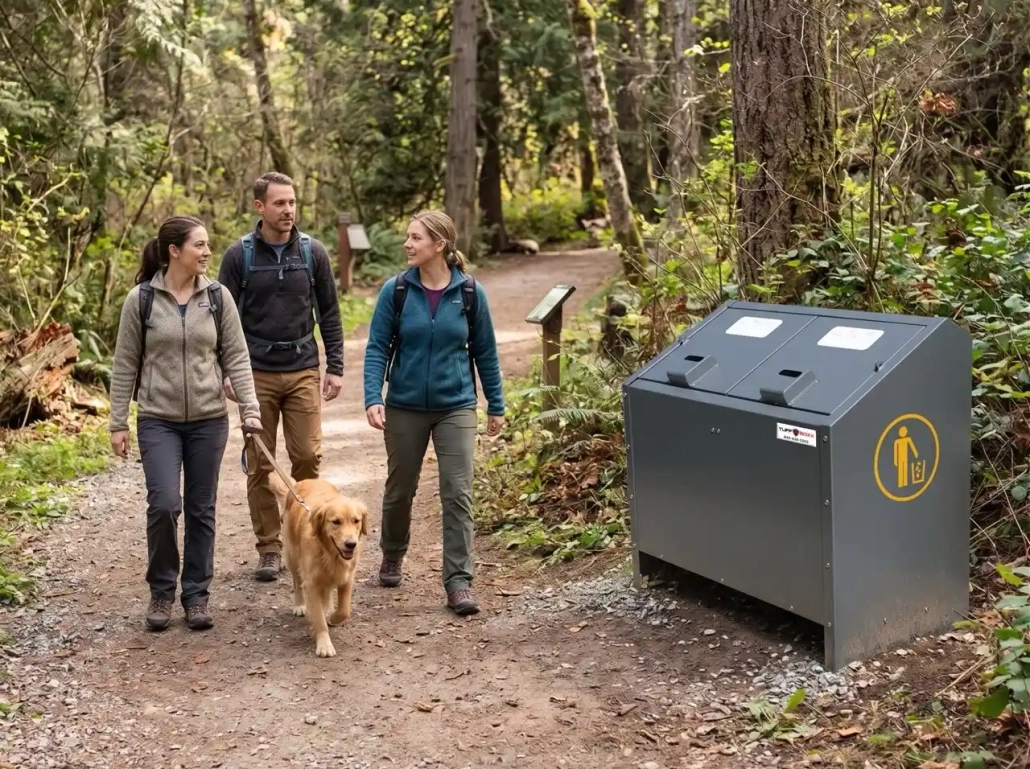
Parks, campgrounds and public spaces need containers that are easy for everyone to use and secure against wildlife. The TuffBoxx Camper and Picnic models use a one-finger release, mailbox-style chute that meets accessibility standards. The Trail series offers ADA-compliant single and double stream receptacles for trail systems and recreational facilities, and the Broot handles high-volume waste of up to 20 bags.
Residential areas often already have curbside polycarts. The TuffBoxx ToteBoxx encloses existing 64 and 96 gallon carts in a lockable steel enclosure, so residents can secure the carts they already have.
3. Plan for Servicing
A container only works if crews can service it efficiently. TuffBoxx commercial containers are designed to work with standard inner containers and liners, and lockable front doors make collection straightforward while keeping waste secure between pickups.
4. Pair Infrastructure With Education
The best containers work best when people use them correctly. Plan for clear signage, resident communication and simple messaging about why wildlife-resistant storage matters. Free resources from organizations like BearWise can support local education efforts.
5. Phase the Rollout
You do not have to replace everything at once. Many communities start with the highest-conflict locations, measure the results, then expand the program in later budget cycles.
6. Order Early
TuffBoxx containers are built in Princeton, Ontario. Placing orders over the winter helps make sure containers are delivered and installed before wildlife activity picks up in spring.
A Program That Pays Off
A well-planned wildlife-resistant waste program reduces cleanup costs, protects public safety and keeps wildlife from becoming dependent on human food. It also shows residents that their community takes the issue seriously.
Plan this winter. Be ready by spring. Contact TuffBoxx today to discuss solutions for your municipality or parks department.
Toll free: 1-800-387-6318









Leave a Reply
Want to join the discussion?Feel free to contribute!