
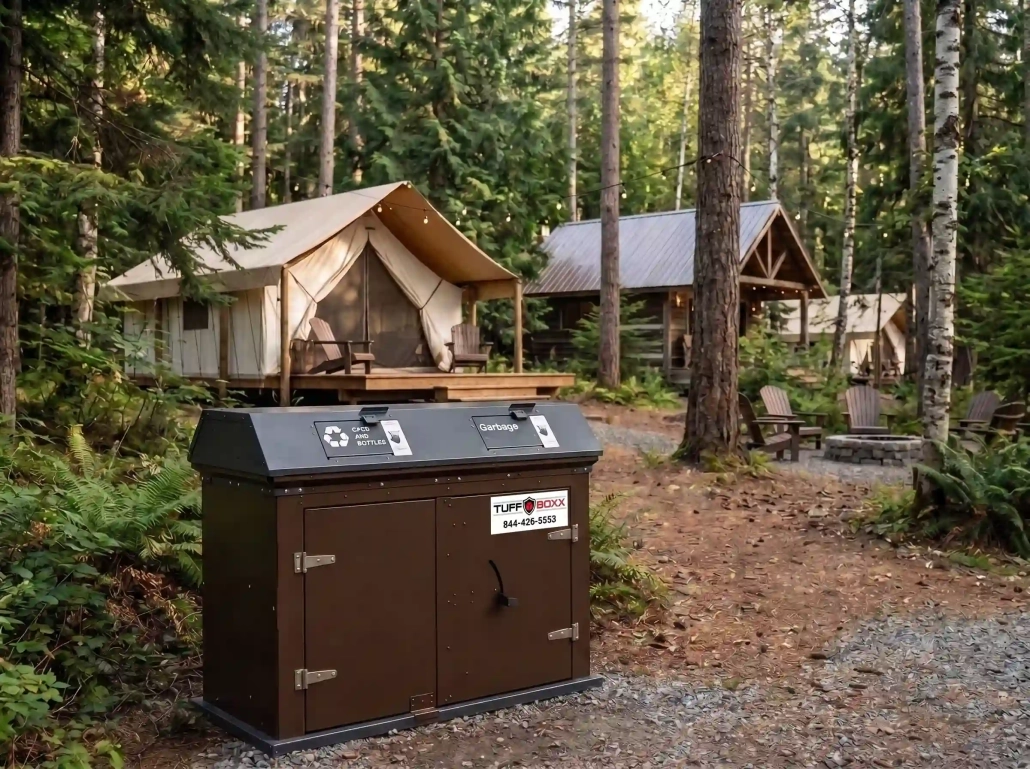
RV Parks, Glamping Sites, and Eco-Resorts: Why Wildlife-Resistant Storage Is Part of the Guest Experience
The outdoor hospitality industry has grown significantly over the past several years. Glamping sites, eco-resorts, and upscale RV parks now compete on the quality of the guest experience. Traditional campgrounds, by contrast, never had to. Reviews are public, and expectations are high. As a result, one wildlife incident at the wrong moment can define a guest’s entire stay and online review.
For operators in this space, wildlife-resistant waste management is not a back-of-house detail. It is a direct input into the guest experience.
The Wildlife Problem Is Not Optional
Most outdoor hospitality properties in Canada and the United States operate in or adjacent to wildlife habitat. Food waste and unsecured storage draw raccoons, bears, skunks, and other wildlife. In particular, glamping and RV park environments create exactly the conditions they are looking for. Those conditions include food odors, accessible waste, and guests who are not always vigilant about wildlife best practices.
A raccoon tipping bins near a guest’s tent at night is a disruption. A bear entering a waste area while guests are nearby is a serious safety and liability event. Neither outcome is acceptable for a property that competes on experience.
The most effective way to prevent both is to remove the attractant entirely before any incident occurs.
Guest-Facing and Back-of-House Requirements Are Different
Outdoor hospitality properties have two distinct wildlife storage challenges. The first is back-of-house: waste collection points, dumpster areas, storage rooms for food and supplies. These need high-capacity, rugged solutions that hold up to sustained wildlife pressure and daily operational demands.
The second is guest-facing: waste receptacles near dining areas, firepits, common spaces, and site pads. These need to be wildlife-resistant. They must also be easy for guests to use without instruction. They should be accessible by design and appropriate in appearance for the property’s aesthetic.
TuffBoxx addresses both. The commercial Broot handles high-volume back-of-house waste. It holds up to 20 bags of garbage and offers lockable front door access designed for easy collection. The Camper and Picnic models use an animal-resistant one-finger release mailbox-style chute. This chute is accessible, intuitive for guests, and proven against bears and smaller wildlife alike.
For guest site pads and individual use areas, TuffBoxx recreational containers provide wildlife-resistant storage for food, equipment, and personal items that guests need to keep secure and organized during their stay.
The Review Risk Is Real
A wildlife incident at an outdoor hospitality property does not stay private. It goes into the review. A property that invests in proper wildlife-resistant waste management reduces the operational risk, the liability exposure, and the reputational risk that comes with being the place where the raccoon got into the garbage or the bear showed up at site seven.
For properties competing in a market where online reviews drive bookings, that risk reduction has measurable value.
Built for Commercial Outdoor Hospitality Environments
TuffBoxx commercial containers are built from heavy-gauge galvanized steel to hold up through full seasons of outdoor use, weather exposure, and the daily demands of a working hospitality property. They are designed for waste management company servicing, simple to maintain, and proven in campground and outdoor recreation environments across Canada and the United States.
Contact TuffBoxx to discuss the right commercial wildlife-resistant storage solution for your RV park, glamping site, or eco-resort.
Contact: 1-844-426-5553








Leave a Reply
Want to join the discussion?Feel free to contribute!