
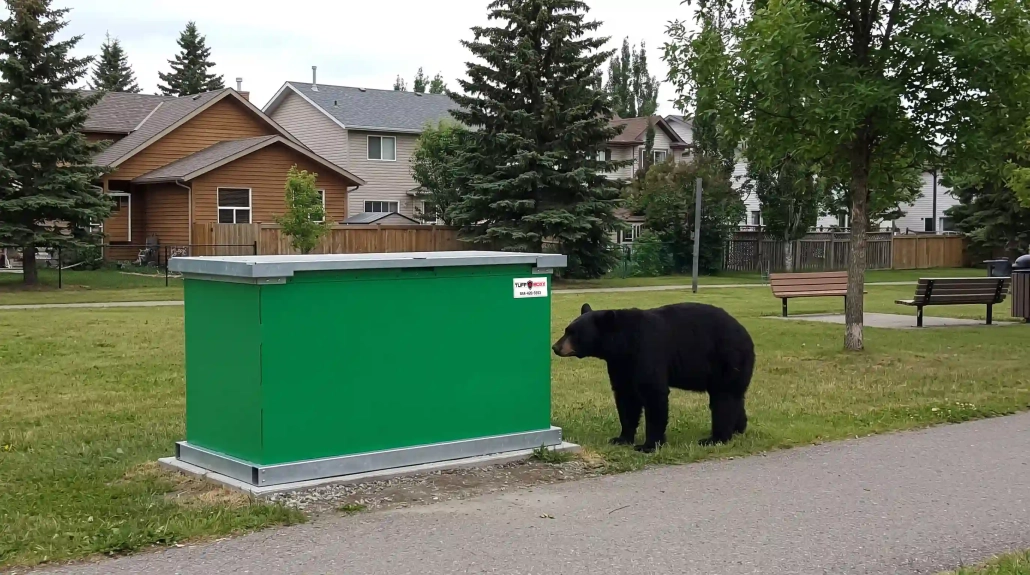
How Property Managers and HOAs Can Reduce Wildlife Incidents Across an Entire Neighbourhood
Wildlife pressure on residential properties is rarely an individual problem. When one property on a street has unsecured garbage, the raccoons, skunks, and bears it attracts become a problem for the entire block. In fact, the animal that finds a reliable food source at one address will explore adjacent properties. The pattern spreads.
Property managers and homeowners associations manage multiple units across a residential community. For them, this collective dynamic creates both a challenge and an opportunity. The challenge is that one non-compliant property can undermine the whole neighbourhood. The opportunity, however, is that coordinated, community-wide action is far more effective than individual effort.
Why Individual Solutions Are Not Enough
When wildlife management is left entirely to individual homeowners or tenants, the results are inconsistent. Some residents secure their waste properly. Meanwhile, others do not. The unsecured bins are all a motivated raccoon needs to keep returning to the area, and once an animal has established a territory around a food source, it does not stay in one yard.
Property managers and HOAs are in a unique position to set and enforce a community-wide standard that removes this inconsistency. As a result, when every unit has a wildlife-resistant storage solution, the neighbourhood stops being an attractant entirely.
Why Property Managers Need Wildlife-Resistant Storage
For property managers overseeing multi-unit residential communities, wildlife incidents create real operational and financial consequences. Property damage from wildlife accessing waste areas is a maintenance cost. Tenant complaints about scattered garbage, odors, and wildlife sightings are a management burden. In some municipalities, improperly stored waste that attracts wildlife creates bylaw liability for the property owner, not just the tenant.
Investing in proper wildlife-resistant storage across a managed property is a maintenance cost reduction, a complaint reduction, and a liability reduction. It is a business decision with a calculable return.
The HOA Case for Community Standards
For homeowners associations, the standard set around waste storage affects property values, neighbourhood aesthetics, and the general quality of life for residents. A neighbourhood where scattered garbage and wildlife visits are a recurring issue is a less desirable place to live. One where waste is consistently managed and wildlife incidents are rare is a more attractive community.
HOAs that establish clear standards around wildlife-resistant waste storage are protecting the community’s character. They also protect the value of individual properties by making it straightforward for residents to comply.
TuffBoxx for Multi-Unit and Community Applications
TuffBoxx offers a residential product range suited to the varied requirements of managed communities and multi-unit properties. The TuffBoxx Grizzly, Kodiak, and Bruin models provide heavy-duty individual unit solutions for single-family homes and townhouses. The ToteBoxx enclosure fits standard 64 and 96 gallon polycart bins, making it straightforward to bring existing bins into compliance without replacing the entire waste infrastructure.
For communal waste areas, the TuffBoxx commercial line provides high-capacity, rugged solutions designed for shared use environments with regular collection.
All TuffBoxx products are built from galvanized steel for durability through Canadian climate conditions and sustained wildlife pressure, season after season.
Contact TuffBoxx to discuss community and multi-unit wildlife-resistant storage solutions.
1-844-426-5553









Leave a Reply
Want to join the discussion?Feel free to contribute!